> For the complete documentation index, see [llms.txt](https://docs.langstack.com/welcome/llms.txt). Markdown versions of documentation pages are available by appending `.md` to page URLs; this page is available as [Markdown](https://docs.langstack.com/welcome/get-started/learn-langstack/introduction-to-flows-and-flow-components/what-is-a-flow.md).
# What is a Flow?
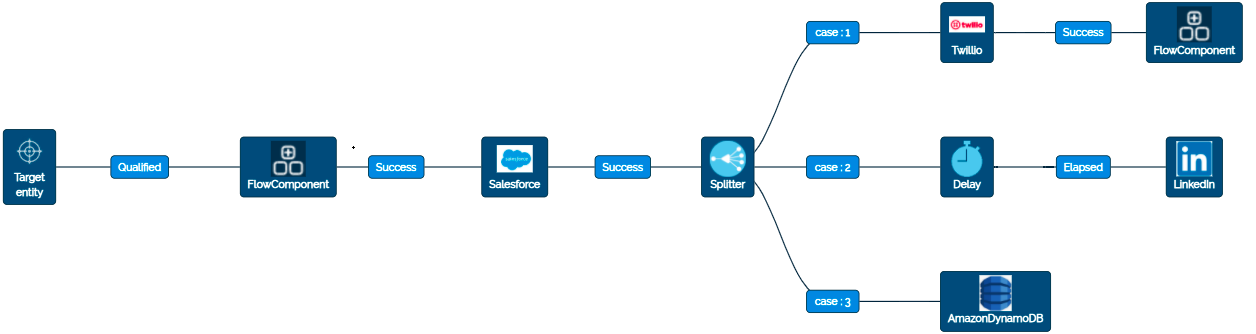
* The Flow section consists of templates to create Flows or a sequence of activities (Flow components) that reflect a business process.
* These activities and events are executed in a sequence constructed to perform operations according to business requirements.
* Flows use Flow components as the building blocks of the business process.
* When a Flow component is placed in the Flow, it becomes an Activity in the Flow.
* Flows can be triggered from other Langstack application templates, including APIs, Processes, and Validations.
* Users can log the progression of the execution of the Flow in an entity.
* An entity must be loaded for a Flow to be created, i.e., it must be Qualified before creating the Flow. (see image below)