> For the complete documentation index, see [llms.txt](https://docs.langstack.com/welcome/llms.txt). Markdown versions of documentation pages are available by appending `.md` to page URLs; this page is available as [Markdown](https://docs.langstack.com/welcome/get-started/learn-langstack/connectors/create-a-connector.md).
# Create a connector
To create a connector, follow the steps below:
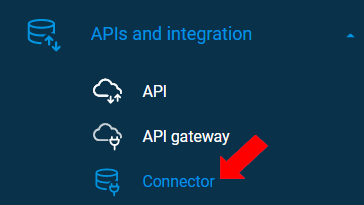
* To go to the Connector template, select the Connector menu item under the “APIs and integration” menu.
*
```
```
* On the “APIs and integration” page, click the \[+ Connector] button.
{% embed url="" %}
* On the “New Connector” page, the Connector>Details tab is preselected.
{% embed url="" %}
* Enter the connector name.
{% embed url="" %}
* Optionally add a description of the connector.
{% embed url="" %}
* Select the type of connector and add the needed credentials as described below. When users add credentials, the password is maintained in the session until the user closes the connector page. In later views to the connector details, the password is not transferred, and the page will work with an encrypted text for the password. The users may change the password, provided that they have the rights.\
As per the image below, there is also a quick-create option to create and edit a Connector within the ETL pipeline (under Data Source or Data Destination). ([See more details in the ETL pipeline section](/welcome/get-started/learn-langstack/introduction-to-etl-pipeline.md).)
{% embed url="" %}
* To save the settings, click the \[Save] button. The \[Test connection] button gets activated.\
If the user clicks the \[Save & Close] button, the connector page will save and close.
{% embed url="" %}
* To test the connection, click the \[Test connection] button.
{% embed url="" %}
* When the connection test is successful, it displays a success message.