# Set up AWS S3 Connector

To set up AWS S3 Connector, proceed as follows:

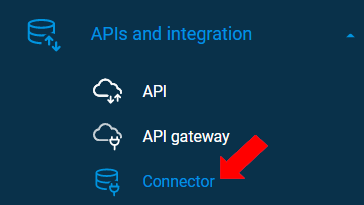
* To go to the Connector template, select the Connector menu item under the “APIs and integration” menu.

<figure><img src="https://media.langstack.com/documentation/media/images/connector/onedriveconnector/odconnecmenu.png" alt=""><figcaption></figcaption></figure>

* In the “APIs and integration” page, click the \[+ Connector] button.

<figure><img src="https://media.langstack.com/documentation/media/images/connector/awss3connector/awsaddconn.png" alt=""><figcaption></figcaption></figure>

* In the “New Connector” page, the Connector > Details tab is preselected.

<figure><img src="https://media.langstack.com/documentation/media/images/connector/awss3connector/awsconndetsempty.png" alt=""><figcaption></figcaption></figure>

* Update the following information:
  1. Enter a name for the connector.
  2. Optionally add a description.
  3. By default, AWS S3 is preselected.

<figure><img src="https://media.langstack.com/documentation/media/images/connector/awss3connector/awsconndetslabel.png" alt=""><figcaption></figcaption></figure>

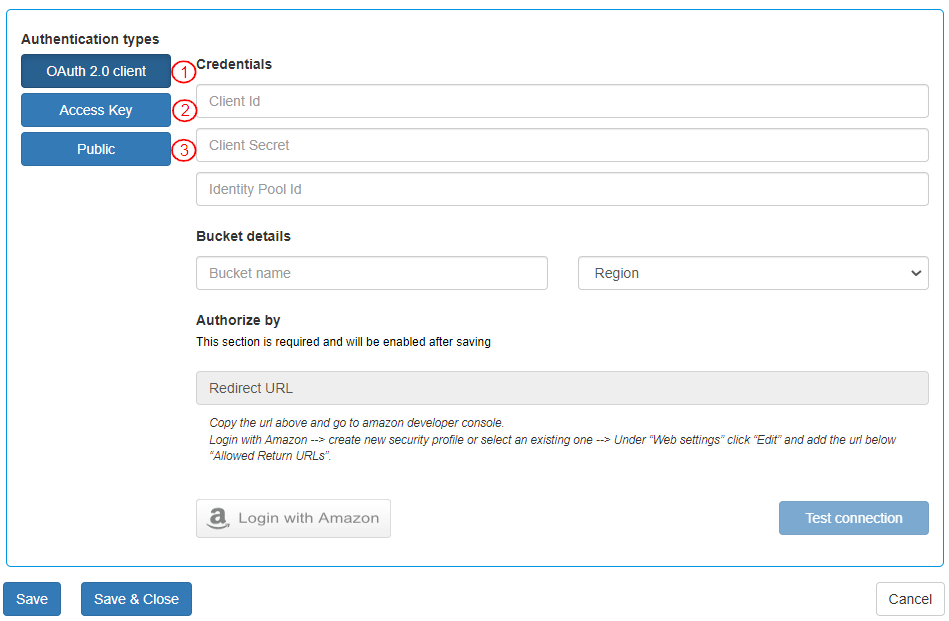
* Select any of the following authentication types in AWS S3:
  1. OAuth 2.0 client (default option)
  2. Access Key
  3. Public
<figure><img src="https://media.langstack.com/documentation/media/images/connector/awss3connector/awsauthtypes.png" alt=""><figcaption></figcaption></figure>


---

# Agent Instructions: Querying This Documentation

If you need additional information that is not directly available in this page, you can query the documentation dynamically by asking a question.

Perform an HTTP GET request on the current page URL with the `ask` query parameter:

```
GET https://docs.langstack.com/welcome/in-depth-learning/connectors/aws-connector/set-up-aws-s3-connector.md?ask=<question>
```

The question should be specific, self-contained, and written in natural language.
The response will contain a direct answer to the question and relevant excerpts and sources from the documentation.

Use this mechanism when the answer is not explicitly present in the current page, you need clarification or additional context, or you want to retrieve related documentation sections.